Binance Hong Kong OTC Withdrawal Guide | How to Cash Out HKD 1 Million Safely
04月 26, 2026
Holding crypto on Binance and want to cash out in Hong Kong? This in-depth guide covers the full OTC withdrawal process for HKD 1 million+, including platform selection, bank compliance tips, tax considerations, and risk management strategies.
A seven-figure portfolio balance means nothing until it hits your bank account. For Hong Kong investors holding large crypto positions on Binance, converting paper gains into real Hong Kong dollars is a process that demands careful planning. Get it wrong and you could face frozen bank accounts, compliance interrogations, or costly delays that eat into your returns. This guide breaks down the full OTC withdrawal process from a Hong Kong perspective, covering every step from choosing the right channel to getting your money safely banked — including the details most guides skip over.
Why Large Withdrawals Require a Different Approach
Most people assume cashing out crypto is as simple as hitting "withdraw" and waiting for the bank transfer. That assumption works fine for small amounts. Once you cross the six-figure threshold, the rules of the game change entirely. Hong Kong banks operate under strict Anti-Money Laundering (AML) compliance frameworks. Even when your crypto assets are entirely legitimate, a large unexplained deposit can trigger an automatic review. Banks may request full transaction histories, platform screenshots, proof of fund origin, and written explanations — and in some cases, they may freeze the receiving account while the investigation runs, which can take weeks. The solution is not to avoid withdrawing. It is to withdraw strategically, with the right documentation in place before the money moves.
What Is OTC Withdrawal and What Are Your Options in Hong Kong?
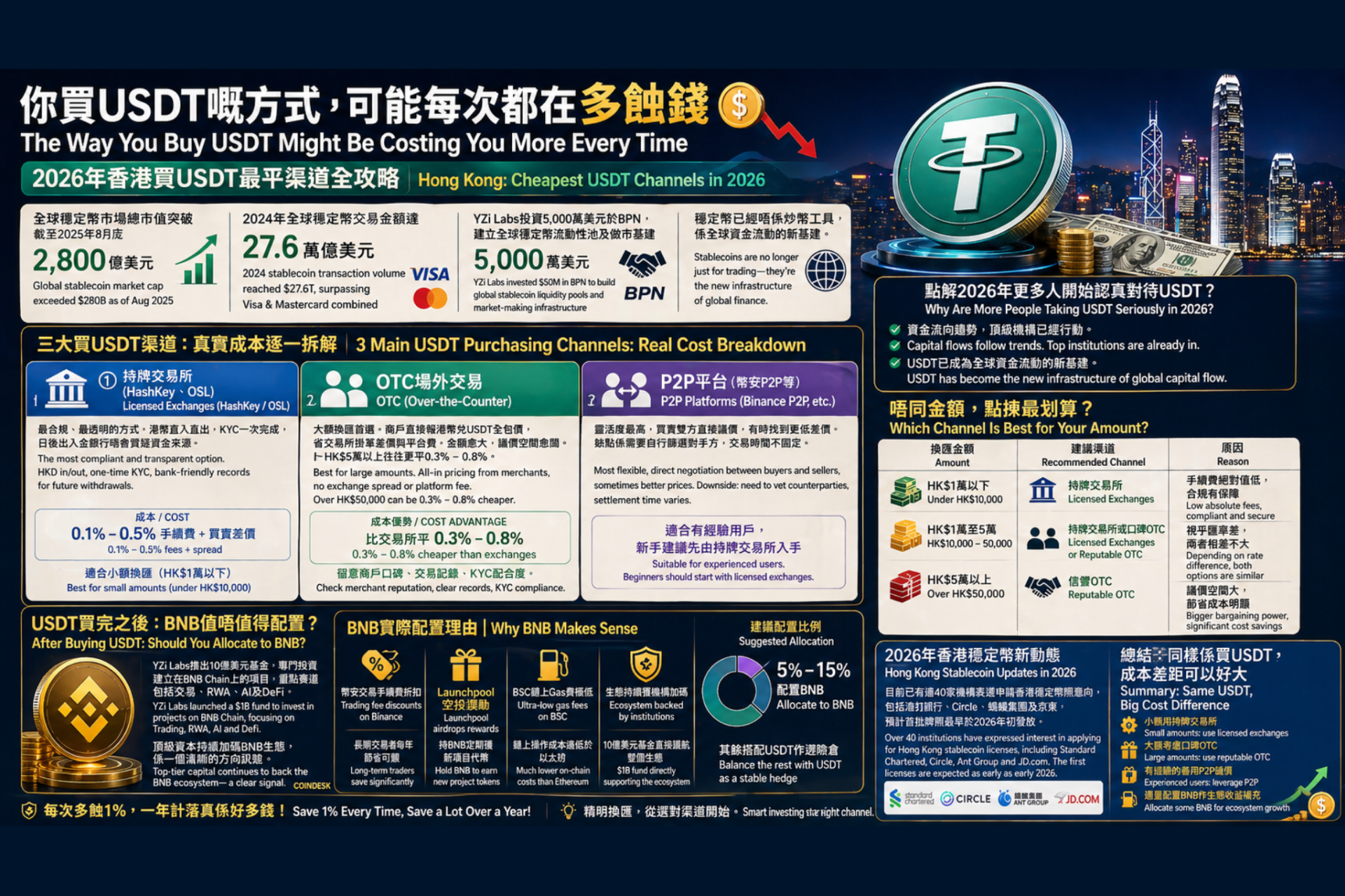
OTC (Over-the-Counter) withdrawal means exchanging your crypto for fiat currency directly with a counterparty, outside of a public exchange order book. For large amounts, this is almost always preferable to market selling — you get a negotiated rate, minimal slippage, and flexible settlement terms. In Hong Kong, there are three main OTC withdrawal routes:
Binance OTC Desk: Binance's in-house OTC service handles transactions from USD 50,000 upward. Quotes are instant, rates are competitive, and HKD settlement is supported. The entire process stays within the Binance ecosystem, which simplifies record-keeping. SFC-Licensed Exchange OTC: Platforms such as HashKey Exchange and OSL offer OTC services for institutional and high-net-worth clients. Because these platforms are regulated by the Securities and Futures Commission (SFC), their transaction records carry significantly more weight with Hong Kong banks. Local OTC Shops: Physical walk-in OTC services exist across Hong Kong and can settle in cash. Compliance standards vary enormously. For any transaction approaching seven figures, this route carries unacceptable risk and is not recommended.
Editorial note: For most retail investors targeting clean bank settlement, a Binance OTC withdrawal combined with a licensed exchange as an optional intermediary step represents the most practical and defensible approach.
Step-by-Step: How to Execute a Binance OTC Withdrawal
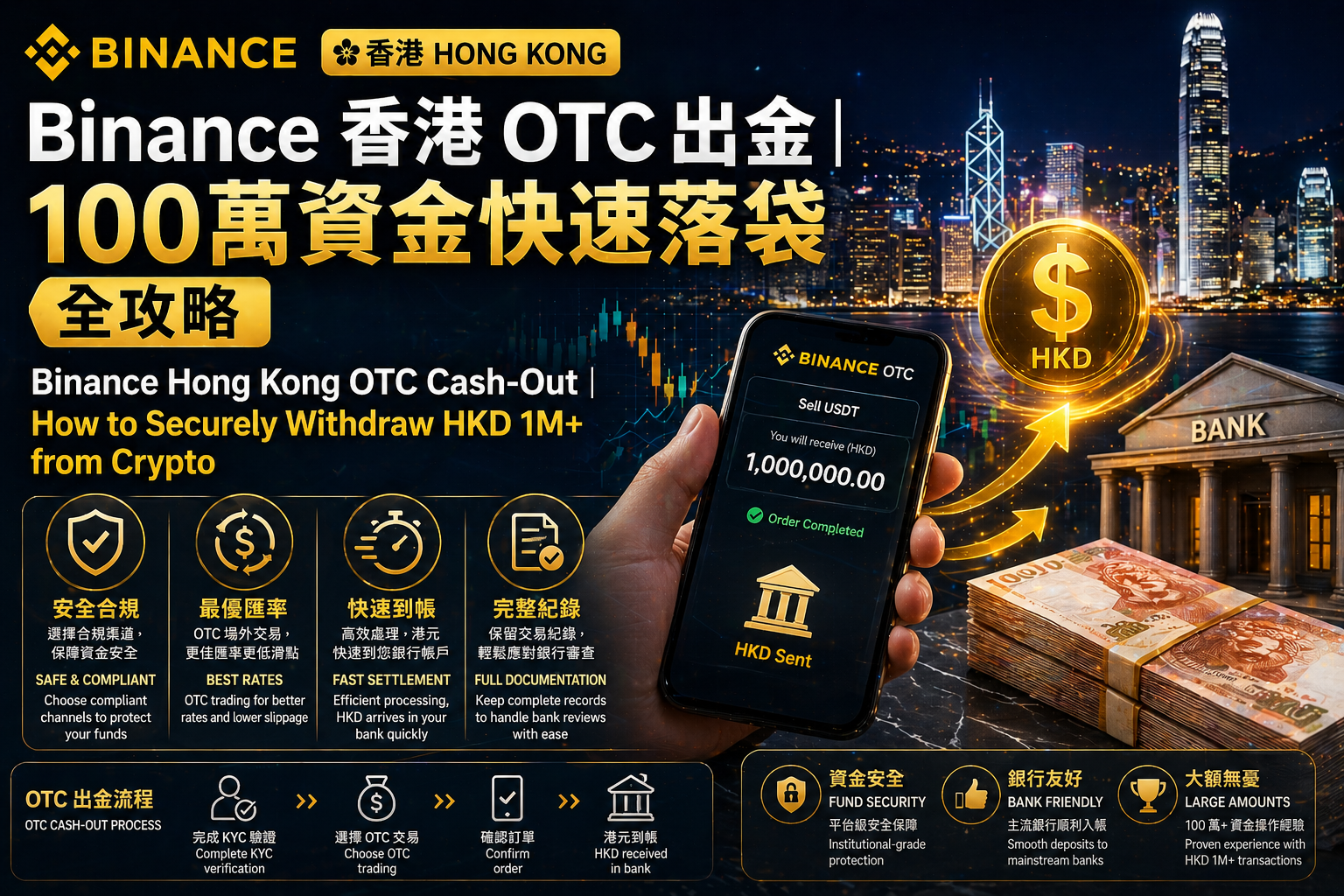
Using USDT-to-HKD as the example, here is the standard process:
Log into Binance and navigate to Trade → OTC Trading Enter the amount you wish to convert (run a small test transaction first to verify the quote mechanism) Review the system-generated quote — the rate lock window is typically 10 to 30 seconds Confirm the transaction; USDT is deducted from your spot wallet immediately HKD is transferred via bank wire to your pre-registered bank account
The process is straightforward, but there is one detail that catches many users off guard: your registered bank account must be in exactly the same name as your Binance KYC identity. A mismatch — even a minor one, such as a missing middle name — can cause the transfer to be rejected or flagged for review.
Real Cost Breakdown: HKD 1 Million Withdrawal
Understanding the true cost of a large OTC withdrawal helps you plan effectively. Here is what to expect on a HKD 1,000,000 transaction:
Exchange rate spread: OTC quotes typically sit 0.1%–0.3% below mid-market rate, representing a cost of roughly HKD 1,000–3,000 Binance withdrawal fee: Transferring USDT off-platform costs approximately USD 1 via TRC20; ERC20 network fees are considerably higher Bank transfer fee: Domestic transfers are usually free; cross-bank or international wires may incur HKD 100–300 Tax liability: Hong Kong currently does not impose capital gains tax on personal crypto profits. However, profits deemed to be of a trading or commercial nature may be treated as assessable income under profits tax rules
The direct financial cost of the withdrawal itself is relatively modest. The real risk is on the compliance side — inadequate documentation can create delays or complications that prove far more expensive than any fee.
How to Get Your Bank to Accept the Funds Without Issues
This is the step where most large withdrawals run into trouble. Banks are not anti-crypto by default, but they are anti-risk, and unexplained large deposits look like risk. The following steps significantly improve your chances of a smooth landing:
Export a full transaction history: Download a complete PDF record from Binance covering all deposits, trades, and withdrawals. This is your primary document. Prepare a source of funds statement: If your crypto originated from a fiat purchase years ago, locate the original bank transfer or exchange receipt. The further back you can trace the chain, the better. Consider splitting the withdrawal: Three to four transfers of HKD 200,000–300,000 each, spaced over several days, reduce the single-transaction risk profile without requiring any additional documentation. Choose a crypto-friendly bank: Market feedback consistently identifies ZA Bank and Mox Bank as more receptive to crypto-related deposits than most traditional institutions. Among traditional banks, tolerance varies significantly by branch and relationship manager. Keep your bank account active: A dormant account that suddenly receives a large crypto transfer is a textbook AML trigger. Maintaining regular transaction activity in your receiving account before the withdrawal helps normalise the deposit in the bank's risk assessment.
Advanced Strategy: Using a Licensed Exchange as an Intermediary
A growing number of sophisticated investors in Hong Kong are choosing to transfer assets from Binance to a licensed platform — HashKey Exchange or OSL — before completing the final withdrawal to their bank. The extra step adds time and a small additional fee, but it offers meaningful advantages:
Stronger bank acceptance: A withdrawal originating from an SFC-licensed entity is treated very differently by bank compliance teams than one from an offshore platform Legally recognised documentation: Licensed exchanges can provide formal transaction certificates and compliance letters, which carry weight in tax or legal contexts Cleaner audit trail: The entire chain from crypto asset to bank deposit becomes traceable through regulated institutions, which is the gold standard for compliance
Whether this step is worth it depends on your personal risk tolerance, the bank you use, and how concerned you are about future regulatory scrutiny. For amounts approaching or exceeding HKD 1 million, the additional protection is generally worth the cost.
Risk Warnings
Avoid unregulated OTC operators: The Hong Kong market has no shortage of OTC brokers advertising rates that seem too good. If an operator cannot demonstrate proper registration and AML procedures, the risk of your funds being associated with money laundering activity — even unknowingly — is real. Asset freezes in such cases can be extremely difficult to resolve. Tax records matter even without a tax bill: While Hong Kong does not currently have a capital gains tax regime for retail crypto investors, the Inland Revenue Department has been paying increasing attention to digital asset income. Maintaining thorough records now protects you regardless of how the regulatory environment evolves. OTC quotes expire fast: Rate locks of 10–30 seconds require you to be ready to confirm immediately. In a volatile market, hesitating or refreshing the page can result in a significantly different rate than you expected. Do not treat the first small test as the final benchmark: OTC rates for larger amounts sometimes differ from small test transactions. Always confirm the rate on the full amount before committing.