War & Crypto 2026: How the Iran Conflict Is Shaking Bitcoin — And What Hong Kong Exchange Users Should Do Now
04月 21, 2026
Bitcoin is trading near $74,000 as US-Iran tensions hit a critical inflection point. This guide breaks down how the conflict is driving crypto volatility and what Hong Kong investors should do using licensed exchanges like HashKey Exchange and OSL.
It's April 21, 2026. A ceasefire deadline expires tomorrow. Bitcoin is hovering just above $74,000. And traders around the world — including those using Hong Kong crypto exchanges — are watching every headline out of Islamabad with one hand on the sell button. This is the reality of crypto markets in 2026. The Iran war has become the single biggest macro driver of Bitcoin's price, and understanding that dynamic isn't just interesting — it could protect your portfolio.
What's Happening Right Now: April 21 Market Update
The latest 24 hours have been another rollercoaster. Bitcoin slipped 1.6% to $74,335 on Monday as Iran reimposed controls on the Strait of Hormuz and the US seized an Iranian cargo ship. Crypto News But here's what's notable: Bitcoin has proved more resilient than oil and equities to the latest Iran-related flare-up, slipping only modestly even as traditional markets repriced Middle East risk. Brent crude surged over 5% while the S&P 500 futures dropped 0.5% — yet Bitcoin only fell 1.6%. CoinDesk The pattern tells a bigger story. This is the fourth major Iran-related risk event crypto has absorbed since the conflict began, and the pattern of shrinking sell-offs continues — earlier escalations produced sharper drawdowns in Bitcoin than this one, with each successive flare-up compressing the magnitude of the crypto reaction. CoinDesk Critically, the April 22 ceasefire expiry is now one day away with no Iranian delegation confirmed for the Pakistan talks. A ceasefire extension or last-minute deal would likely replicate the April 8 template: oil falling 13% and BTC surging toward higher levels within hours of any announcement. Crypto News
The Full Picture: Bitcoin's Rollercoaster Since the War Began
To understand where we are, you need to understand how we got here. On February 28, the US and Israel launched joint strikes against Iran — the broadest Middle Eastern conflict in decades. Bitcoin dropped from $70,000 to below $63,000 within hours. Bitcoin Magazine Since then, the market has been caught in a relentless cycle of war headlines and diplomatic signals:
On April 8, Bitcoin touched a three-week high, climbing as much as 5% to $72,841 after a ceasefire deal between the US and Iran briefly raised optimism. Bloomberg On April 17, catalysed by a US-Iran ceasefire announcement and the temporary reopening of the Strait of Hormuz, Bitcoin hit an intraday high of $78,384. Tradingkey Then on April 19, Bitcoin fell to approximately $73,753 after Iran rejected a second round of US peace talks, wiping an estimated $83 billion from the broader crypto market. Bitcoin News
Despite all the volatility, Bitcoin and Ethereum are actually up 12.3% and 20.2% respectively since the war began — their status as apolitical assets potentially giving them a demand edge over other risk assets in times of global crisis. Yahoo Finance
Bitcoin as a Geopolitical Hedge: The 2026 Reassessment
The Iran war has forced a major rethinking of Bitcoin's role in portfolios. Is it "digital gold" or just another risk asset? Bitcoin's price has gained about 12% since the start of the Iran war, while the S&P 500 has slipped and gold has sold off. The Iran war has provided a catalyst for the reevaluation of Bitcoin's role in geopolitics, and its potential use as a settlement layer is becoming increasingly evident. CryptoLinkNet Recent reports from CoinDesk indicate that Iran has intensified its use of crypto assets to bypass financial sanctions, reinforcing Bitcoin's role as a neutral settlement infrastructure. Matt Hougan has stated that current geopolitical tensions are strengthening Bitcoin's narrative as a reserve asset in response to the fragility of traditional financial systems. Crypto Economy For Hong Kong investors, this matters in a very specific way. As a major regulated crypto hub in Asia, Hong Kong is well-positioned to attract capital flows from investors seeking stable, compliant exposure to crypto during periods of global uncertainty — particularly as other centres face geopolitical risk.
What's Driving the Market Beyond Headlines
The war narrative is real, but it's not the only force in play right now.
ETF Flows Are a Critical Support Floor
Last week, Bitcoin spot ETFs attracted nearly $597 million in inflows over two days on ceasefire hopes. Bitcoin's key support sits between $73,000 and $74,000, where ETF inflows accelerated and institutional buyers are expected to defend spot prices if selling resumes. Crypto News
The CLARITY Act — A Potential Catalyst
On April 16, JPMorgan analysts released a report noting that negotiations for the CLARITY Act have entered the final stage, with the number of disputed points dwindling to two or three core issues. JPMorgan previously stated the bill's passage will be the "ultimate catalyst" for the crypto market, unlocking allocation from large asset managers and pension funds. Tradingkey
The US Strategic Bitcoin Reserve
Patrick Witt, Executive Director of the White House Digital Assets Advisory Council, confirmed that the Trump administration plans to unveil a formal strategy for a strategic Bitcoin reserve within the next two months, utilising Bitcoin seized in government enforcement actions. The US government currently holds approximately 200,000 BTC. Tradingkey
What This Means for Hong Kong Crypto Exchange Users
Whether you're watching the ceasefire deadline or the CLARITY Act vote, the key question for Hong Kong investors is practical: how do you navigate this volatility safely?
Stick to Licensed Hong Kong Exchanges
Market turbulence is precisely when unlicensed platforms become most dangerous. When liquidity dries up, some exchanges freeze withdrawals. Hong Kong's two major SFC-licensed retail exchanges — HashKey Exchange and OSL — operate under strict capital requirements and client asset segregation rules that protect you even in extreme market conditions. HashKey Exchange, Hong Kong's largest licensed exchange, provides institutional-grade infrastructure with full insurance coverage on hot wallets and at least 50% coverage on cold wallets. OSL, listed on the Hong Kong Stock Exchange, offers up to USD $1 billion in asset insurance and undergoes regular audits by the Big Four accounting firms. Both support HKD direct deposits and withdrawals — critical for quick execution when markets move fast.
Don't Chase War Headlines With Leveraged Trades
In the past 24-hour liquidation heatmap, $446.75 million of $549 million total liquidations came from short positions — traders who bet on further price falls got wiped out as the market rebounded. Coin Gabbar Geopolitical volatility is uniquely unpredictable. A single diplomatic tweet can move Bitcoin 5% in minutes. Leveraged positions in this environment carry extreme risk.
Consider Bitcoin ETFs for Lower-Friction Exposure
For investors who want Bitcoin exposure without managing wallet security during a volatile period, Hong Kong-listed Bitcoin Spot ETFs — available through standard brokerage accounts — offer a regulated, institutionally-backed alternative. You trade war-driven volatility through the same infrastructure you use for stocks.
Build Positions on Escalation, Not Ceasefire
The ceasefire breach pattern across six weeks shows that crypto markets price each escalation fast but rarely surrender all prior gains, because traders are simultaneously pricing eventual resolution. Crypto News Historically, buying BTC during peak fear (escalation headlines) and trimming during ceasefire euphoria has outperformed chasing momentum in either direction.
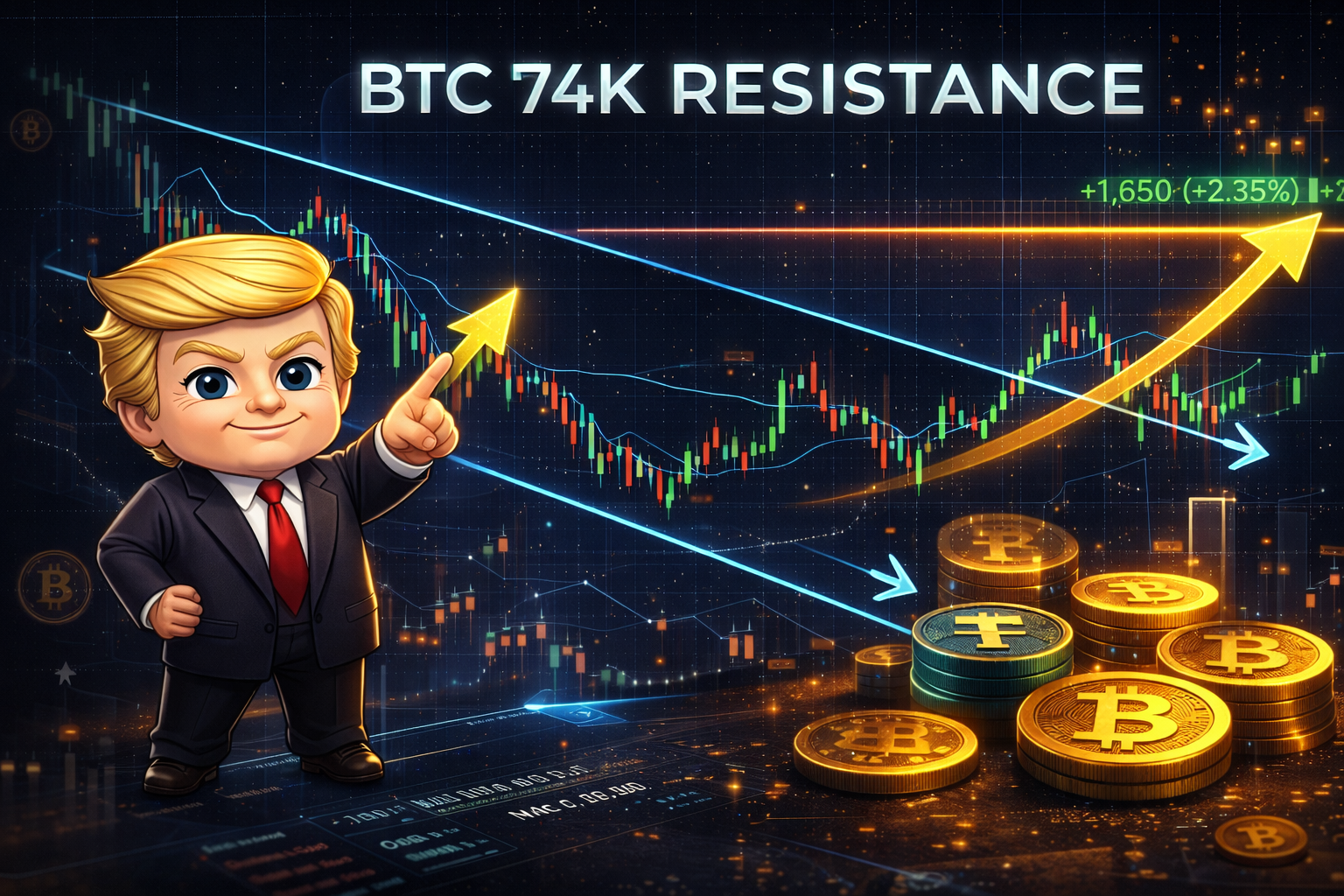
$73,000–$74,000: Critical support zone where institutional ETF buying has repeatedly defended price. A clean break below triggers further downside. $76,000–$78,000: Resistance ceiling of the two-month consolidation range. A close above $78,000 opens the path toward $80,000+. April 22: Ceasefire expiry deadline. The market is treating this as the next binary event — resolution or resumption of hostilities.