Tether Launches Self-Custody "Tether Wallet" — What It Means for USDT Users
04月 16, 2026
Tether officially launched its self-custody wallet "Tether Wallet" on April 14, 2026, supporting USDT, Bitcoin, and tokenized gold. Here's what it means for everyday users and the broader crypto payment landscape.
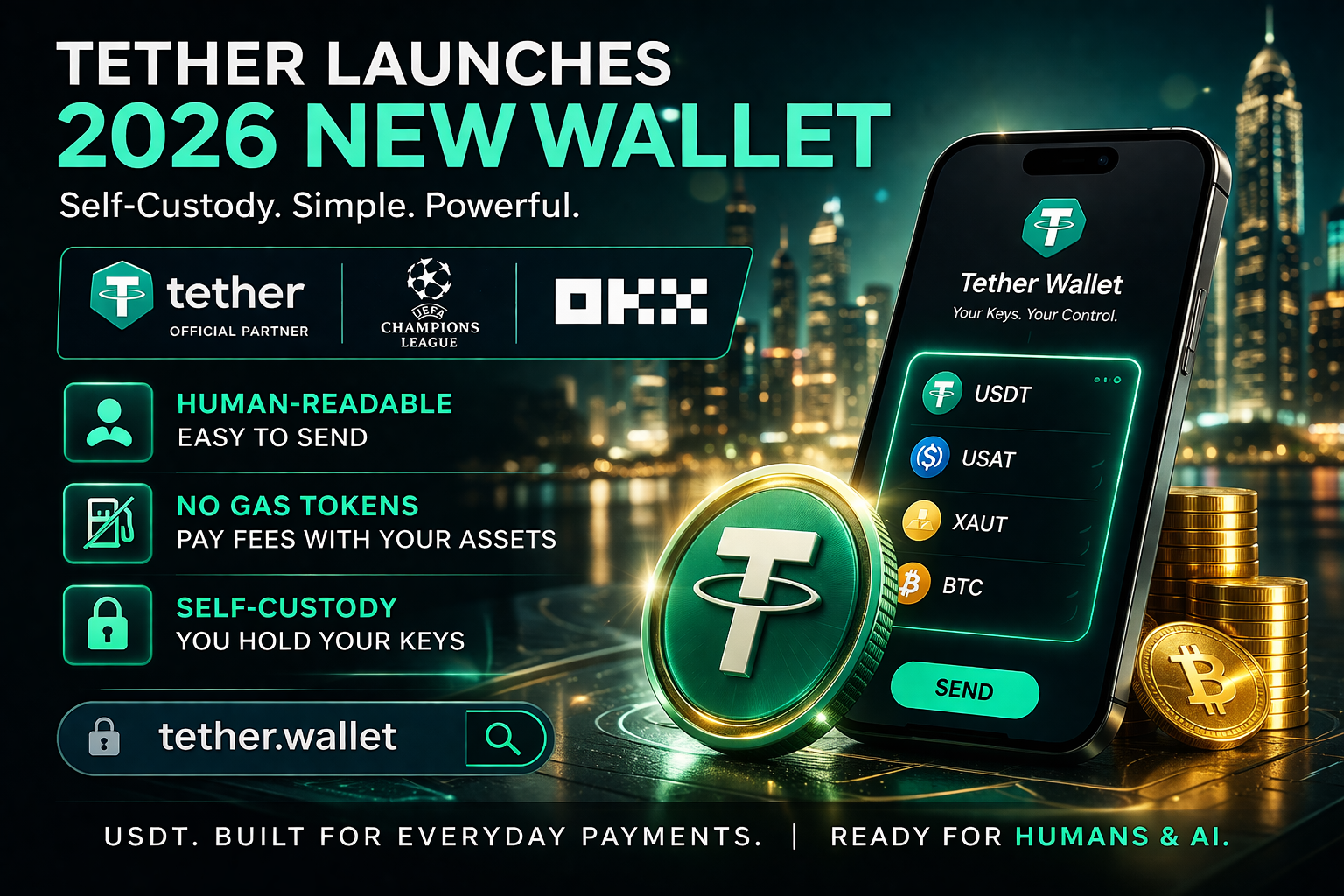
Most people know Tether Wallet as the company behind USDT — the world's largest stablecoin. But on April 14, 2026, Tether made a move that signals something far more ambitious: a direct push into the hands of everyday users, with the launch of its own self-custody wallet, simply called Tether Wallet (tether.wallet). This isn't just another crypto app. It represents a deliberate shift in Tether's strategy — from powering the backend infrastructure of the crypto economy to putting a consumer-facing product directly in users' pockets.
From Infrastructure to End-User: Why This Launch Matters
For years, Tether's role in the crypto ecosystem has been largely invisible to ordinary users. Its infrastructure handled liquidity, payments, and settlement across exchanges — the plumbing behind billions of dollars in daily transactions. Retail users interacted with USDT through third-party wallets and exchanges, never directly through Tether itself. That changes with Tether Wallet. The company is now stepping into the user-facing layer of crypto finance, competing not just as a stablecoin issuer but as a payments app. CEO Paolo Ardoino has been explicit about the goal: making digital asset transfers "as simple as sending a message" — without relying on intermediaries and without surrendering control of your assets. This is a significant positioning move. In a market crowded with wallets, Tether is betting that its network reach and brand recognition can translate into user adoption at scale.
What Assets Does Tether Wallet Support?
The initial asset lineup is deliberately focused rather than exhaustive:
USDT — Tether's flagship dollar-pegged stablecoin USAT — Tether's US-regulated stablecoin XAUT — Tether's tokenized gold product Bitcoin (BTC)
Tether describes these as "the assets that matter most to the majority of users" — a clear prioritization of payment and store-of-value use cases over speculative trading. Rather than supporting hundreds of tokens, the wallet doubles down on what Tether does best: stable, cross-border value transfer. The supported networks include Ethereum, Polygon, Arbitrum, and the Bitcoin Lightning Network — covering both the major EVM ecosystem and fast, low-cost Bitcoin payments.
The UX Upgrade: No Wallet Addresses, No Gas Tokens
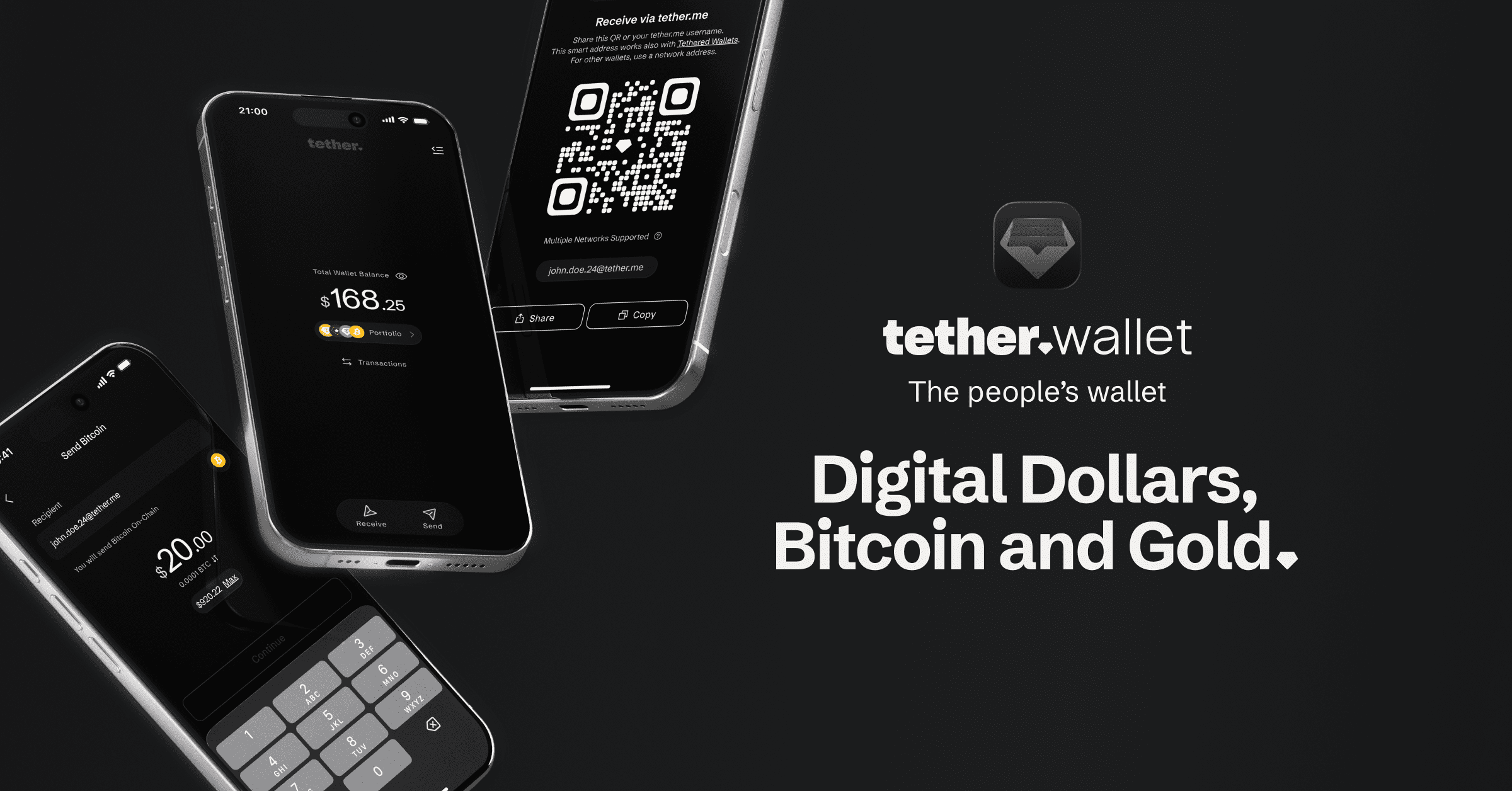
Two features stand out from a user experience perspective. First, human-readable identifiers. Instead of copying and pasting a long string of alphanumeric characters — one of the most common sources of user error in crypto — Tether Wallet allows transfers via readable identifiers. This alone addresses one of the biggest friction points for mainstream crypto adoption. Second, no separate gas token required. Traditionally, sending tokens on Ethereum or Polygon requires holding ETH or MATIC to cover network fees — a confusing extra step for new users. Tether Wallet eliminates this by allowing users to pay transaction fees directly with the asset they are sending. It's a small change that makes a material difference for anyone new to crypto.
Self-Custody at the Core: You Hold Your Keys
The wallet is fully self-custodial, meaning private keys are generated and stored entirely on the user's device. All transaction signing happens locally — Tether never holds your assets on your behalf. This is the fundamental philosophical distinction between a self-custody wallet and a centralized exchange account. When you hold funds on an exchange, you are trusting that platform's solvency and security. With a self-custody wallet, the risk profile shifts entirely to the user — which brings more responsibility but also more genuine ownership. For users who have lived through exchange collapses, this distinction matters enormously.
The AI Angle: Wallets for Machines, Not Just Humans
One of the more forward-looking aspects of Tether Wallet is its explicit design for non-human users. Ardoino has stated publicly that AI agents will need native self-custody wallets, and that machine-to-machine payments will be conducted using Bitcoin and stablecoins. Tether Wallet is built on Tether's open-source wallet development kit, designed to handle transactions between humans, machines, and AI systems alike. As autonomous AI agents begin to participate in economic activity — paying for data, compute, and services — having a payments layer that doesn't require human intermediation becomes critical infrastructure. This positions Tether Wallet not just as a consumer app, but as foundational infrastructure for an emerging AI-native economy.
How This Fits Tether's Broader Expansion
The wallet launch doesn't exist in isolation. Over recent months, Tether has:
Open-sourced its wallet development toolkit for individual and AI-agent wallet development Pushed for crypto wallet integration with video platform Rumble Made strategic investments in Whop and other stablecoin-adjacent infrastructure projects Expanded USDT to the Celo network, targeting emerging market mobile users
Tether Wallet is the consumer-facing culmination of this infrastructure push. With the company claiming its network already reaches over 570 million people globally, the new app is built on an existing foundation — not starting from scratch.
New Insights: What This Means for the Stablecoin Market
The launch raises several questions worth considering for anyone watching the stablecoin space. Does Tether need a wallet to defend its market position? With USDC growing rapidly under regulatory clarity from the GENIUS Act, and Circle positioning itself as the compliance-first stablecoin issuer, Tether faces increasing pressure to prove it can offer more than just a liquid token. A polished consumer wallet is one way to deepen user loyalty beyond pure trading utility. What does this mean for existing wallet providers? Apps like Trust Wallet, MetaMask, and OKX Wallet now face a new competitor that has one significant advantage: it is built by the issuer of the asset itself. Tether can potentially offer fee structures and features that third-party wallets cannot replicate. Is this bullish for USDT adoption? Likely yes, particularly in underbanked markets. Tether has consistently framed its mission around serving the billions of people without access to traditional financial services. A simple, self-custody wallet that requires no bank account and supports cross-border USDT transfers could meaningfully expand the stablecoin's real-world utility.
Risk Disclosure
Self-custody wallets place full responsibility for asset security on the user. Loss of a private key or seed phrase means permanent, unrecoverable loss of funds. Users should research proper backup procedures before transferring significant assets. Additionally, Tether's reserve transparency and regulatory standing across different jurisdictions remain subjects of ongoing scrutiny. This article is for informational purposes only and does not constitute financial advice.
Conclusion
Tether Wallet marks a genuine inflection point for the world's largest stablecoin issuer. By moving beyond backend infrastructure into a consumer product — with human-readable addresses, no gas token requirements, and full self-custody — Tether is making a serious bid for the everyday payments market. Whether it succeeds will depend on execution, adoption, and how regulators respond to a self-custody product operating at this scale. But the direction is clear: Tether is no longer content to be invisible infrastructure. It wants to be the app on your phone.