You Might Be Overpaying for USDT Every Single Time
04月 27, 2026
Same USDT, different price — depending on where you buy it. This guide breaks down the real cost differences between exchanges, OTC desks, and P2P platforms in Hong Kong, so you stop leaving money on the table.
How did you buy your last batch of USDT? Through a licensed exchange? An OTC desk? Or hunting for a match on a P2P platform? Most people never question the channel they use — they just stick with what's familiar. But buying HK$100,000 worth of USDT through the wrong channel can cost you HK$800 to HK$2,000 more than necessary. Do that a few times a year, and you've quietly handed away thousands of dollars for no reason.
Why USDT Is Getting More Serious Attention in 2026
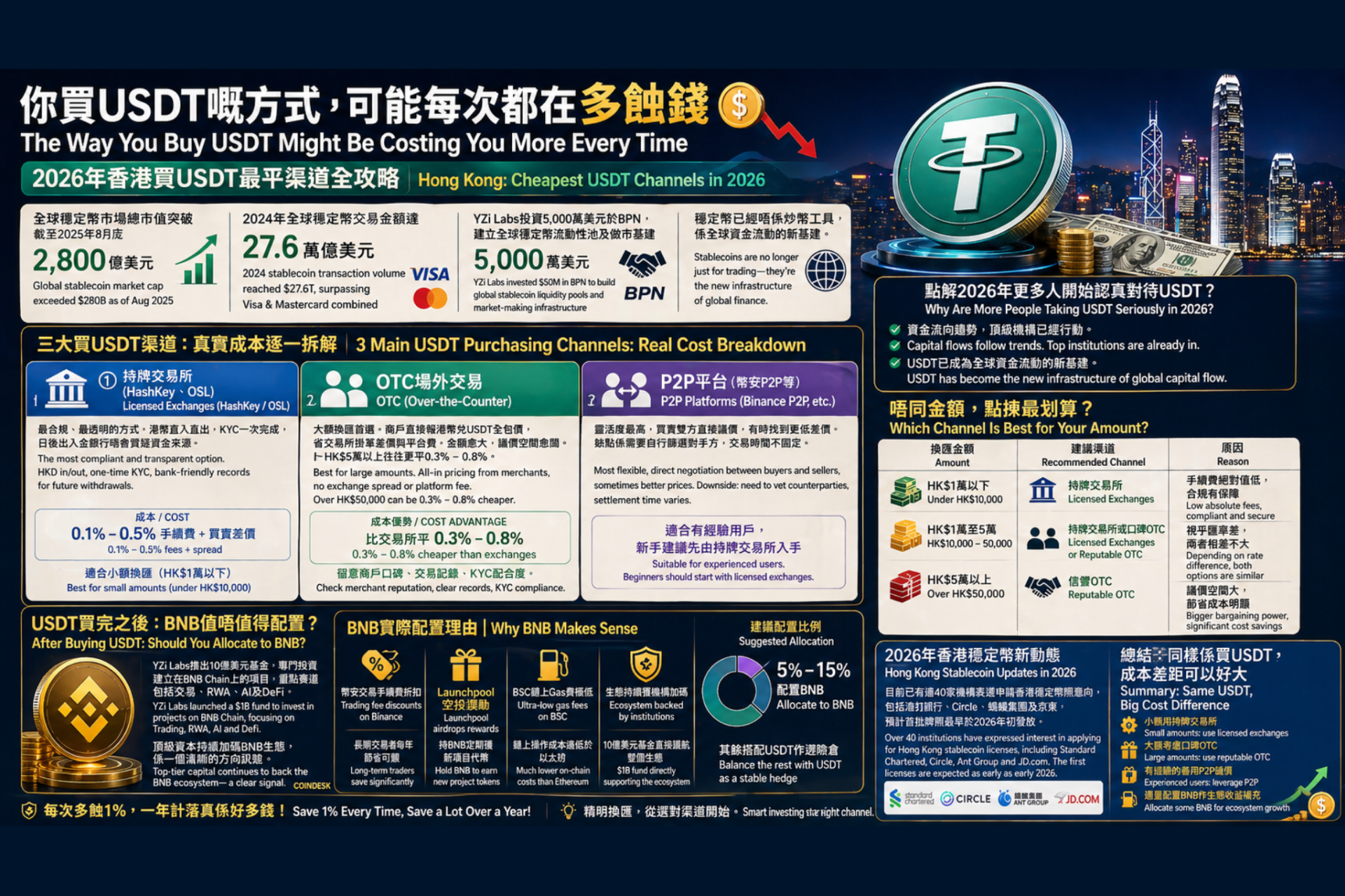
This isn't just a crypto trend. As of August 2025, the global stablecoin market surpassed US$280 billion in total market cap — more than nine times its size in late 2020. In 2024, global stablecoin transaction volume reached US$27.6 trillion, surpassing the combined annual transaction totals of Visa and Mastercard for the first time. Cma Stablecoins are no longer just a parking spot between trades. They are becoming a core layer of global payment infrastructure. And institutional money is already moving — YZi Labs led a US$50 million seed investment into stablecoin payment network BPN, with the goal of building global stablecoin liquidity pools and new market-making infrastructure. Bitget When capital at that scale moves into stablecoin infrastructure, it pays to take your USDT strategy seriously.
Licensed Exchanges
This is the most regulated and transparent option available to Hong Kong users. You fund your account in Hong Kong dollars, complete KYC once, and your transaction history is clean and traceable — useful if your bank ever questions where funds came from. The tradeoff is cost. Most licensed exchanges charge between 0.1% and 0.5% per transaction, on top of the buy-sell spread built into the quoted price. For smaller amounts under HK$10,000, this is perfectly acceptable. But as transaction sizes grow, that fixed fee percentage adds up fast.
OTC Desks
For larger conversions, OTC is typically where you get the best effective rate. Instead of paying a platform fee on top of a spread, OTC operators quote you a single all-in HKD-to-USDT rate. The larger your transaction, the more room there is to negotiate — deals above HK$50,000 can often come in 0.3% to 0.8% cheaper than what you'd get through an exchange. What to look for in an OTC operator: consistent reputation, willingness to provide transaction records, and a straightforward KYC process. Documented transactions protect you down the line if your bank raises questions about fund origins.
P2P Platforms
P2P gives you the most flexibility. You browse listings from individual sellers, negotiate directly, and sometimes find rates better than the market midpoint. The downside is that it requires more effort — you need to vet counterparties yourself, timing is unpredictable, and confirmation speeds can vary. This channel suits experienced users who know what to look for. If you're relatively new to crypto, starting with a licensed exchange is the safer learning ground.
Matching Channel to Amount
For amounts under HK$10,000, licensed exchanges are the straightforward choice — fees are low in absolute terms and the compliance trail is clean. Between HK$10,000 and HK$50,000, either a licensed exchange or a reputable OTC desk can work, depending on the specific rate on offer that day. Above HK$50,000, a trusted OTC desk almost always wins on cost — the negotiating leverage is simply too significant to ignore.
What to Do With Your USDT: The Case for Adding Some BNB
Once you have USDT holdings, the natural next question is how to make them work harder without taking on excessive risk. BNB is worth considering as a complement. YZi Labs launched a US$1 billion fund specifically targeting projects building on BNB Chain, with focus areas including trading, RWA, AI, and DeFi. CoinDesk That level of institutional commitment to the BNB ecosystem is a meaningful signal — it suggests the infrastructure is being taken seriously at a level beyond retail speculation. The practical reasons to hold some BNB are straightforward. Trading fees on Binance are discounted when paid in BNB, which saves frequent traders a meaningful amount annually. Holding BNB also qualifies you for Launchpool rewards — periodic token distributions from new projects launching in the ecosystem. And for anyone doing on-chain activity, BSC gas fees remain substantially lower than Ethereum, making day-to-day operations more cost-efficient. A reasonable allocation might be somewhere between 5% and 15% of your total crypto holdings in BNB, with the remainder in USDT or other stable assets. This keeps overall volatility manageable while still giving you exposure to ecosystem upside.
Hong Kong's Stablecoin Market Is About to Get More Interesting
More than 40 institutions have expressed interest in applying for Hong Kong stablecoin licenses, including Standard Chartered, Circle, Ant Group, and JD.com, with the first batch of licenses expected to be issued as early as early 2026. 36Kr More licensed participants mean more competition, more product options, and better rates for end users over time. Getting comfortable with USDT now — and knowing which channel gives you the best deal — puts you ahead of the curve before the market opens up further.
The Bottom Line
Buying USDT is simple. Buying it cheaply, consistently, and through the right channel takes a bit more thought. Use licensed exchanges for smaller amounts where compliance matters most. Move to a reputable OTC desk when transaction sizes make the cost difference meaningful. And if you have the experience, P2P can sharpen your effective rate further. Pair your USDT base with a measured BNB allocation, and you have a practical setup that balances stability with ecosystem participation. A 1% difference might not feel like much on any single trade. Across a full year of transactions, it's real money — and it's yours to keep if you pay attention.