Hong Kong HKD Stablecoin Licenses Go Live: A New Era for Cross-Border Payments & Business Finance
04月 12, 2026
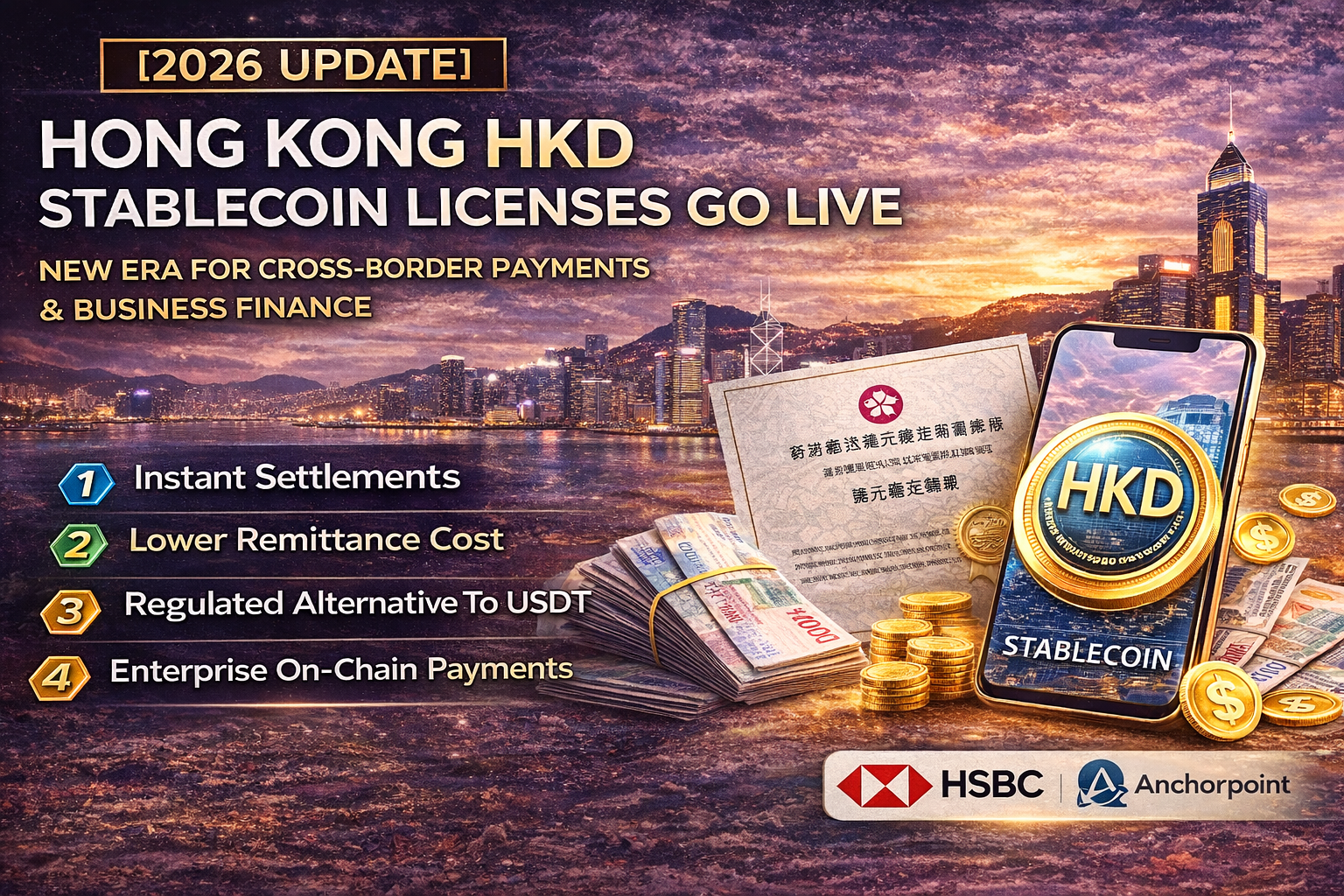
In April 2026, Hong Kong officially issued its first HKD stablecoin licenses. This article explains how it will transform cross-border payments, reduce costs, and reshape business finance across Asia.
April 2026 marks a turning point for finance in Hong Kong.
The Hong Kong Monetary Authority (HKMA) has officially issued the first batch of HKD stablecoin licenses. This is not just another regulatory update—it’s a clear signal:
👉 Traditional finance and blockchain are now merging at a structural level.
For businesses and individuals dealing with cross-border payments, trade, and capital movement, this could be the most important financial shift in the past decade.
Market Background / Problem
For years, cross-border transfers have suffered from three core issues:
Slow settlement (1–3 business days) High costs ($200–$500 HKD + FX spread) Complex processes (bank approvals + KYC checks)
For businesses, the impact is even bigger:
👉 Low capital efficiency = higher operational cost
In fast-moving markets like Southeast Asia and China:
Frequent small transfers are increasing Speed is becoming a competitive advantage
Traditional banking systems are starting to feel outdated and inefficient.
Why TRX / USDT Situation Changed
Under this pressure, stablecoins began to rise.
The reasons are simple:
Instant settlement Lower cost Borderless accessibility
USDT has dominated this space for years. But it comes with one critical issue:
👉 Lack of regulatory clarity
What Hong Kong is doing now is essentially:
👉 Replacing “grey-market stablecoin demand” with a fully regulated alternative
This means:
Some USDT use cases may be replaced OTC markets could shrink Capital flows will become more transparent
Why TRX Fees Increased
As stablecoin demand increases:
On-chain transfers surge Cross-border capital movement accelerates Low-fee chains like TRON (TRX) get heavily used
This leads to:
Higher transaction fees Network congestion Unstable costs
👉 Core reason:
More demand + more panic = more on-chain activity
In the future, we may even see:
Tiered fee structures Priority lanes for enterprise payments
Real Cost Example
Let’s compare:
Traditional Bank Transfer
Fee: $200–$500 HKD Settlement time: 1–3 days FX spread: 0.5%–2%
HKD Stablecoin (Expected)
Fee: Near zero or very low Settlement time: Within minutes Transparent exchange rate
Example: transferring HKD 100,000
Traditional cost: ~$500–$2000 Stablecoin cost: possibly under $50
👉 That’s up to 10x cheaper
How to Reduce Cost
During the transition period (2026–2027), strategy matters.
Recommended approach:
Don’t rely on a single stablecoin Diversify between USDT and future HKD stablecoins Use licensed platforms only Avoid unknown OTC channels Compare blockchain vs bank costs
Practical strategy:
Small transfers → use stablecoins Large transfers → choose based on compliance needs Cross-border → monitor HKDAP and similar systems
New Insights
This shift is bigger than payments—it’s about financial structure.
Three key trends:
Hong Kong becoming a stablecoin hub Enterprise payments moving on-chain A new path for RMB internationalization
Future structure may look like:
HKD stablecoin → Asia settlement layer Offshore RMB stablecoin → trade backbone USDT → gradually shifts to offshore/grey markets
👉 Hong Kong’s role:
Bridge + clearing center + compliance gateway
This is especially important for Southeast Asia:
Cambodia Vietnam Thailand